.webp)
Commissioning Software Development: What You Can Do Yourself with AI and What You Need a Provider For

The Short Answer
Commissioning software means something different today than it did two years ago. With AI tools, business teams can sharpen requirements, sketch interfaces, and build clickable prototypes without understanding a single line of code. That makes commissioning better, not obsolete. Architecture, security, integration with existing systems, operations, and accountability for the result remain engineering work. You commission with a better brief and can check more precisely what you receive.
What Has Changed When Commissioning Software
The traditional path was long: write a requirements specification, collect quotes, run a concept phase, see the first screens after weeks. Many misunderstandings only surfaced once budget had already been spent.
Today, clients often bring a prototype to the first meeting. A typical example: the head of customer service has spent an afternoon in an AI app builder creating a tool that field technicians use to document their assignments. The interface works, the business team is convinced, and the question in the first meeting is which parts of it can become a product. This changes three things:
- Requirements are more concrete because they were discussed using something visible.
- Expectations around speed and price have risen because the first step was so easy.
- The risk of mistaking a prototype for a product is real.
The prototype is an excellent brief. But it is not a product, and usually not a foundation on which a product can be built. Confusing the two means commissioning on the wrong basis.
What You Can Prepare Yourself with AI
Before you commission software, AI tools let you do much of the groundwork that used to take days of consulting:
- Structure requirements. Have meeting notes, process descriptions, and emails turned into an ordered list of requirements. Consistently separate must-haves from nice-to-haves.
- Describe processes. An AI assistant helps document a workflow step by step, including exceptions and edge cases. These edge cases later become the most expensive points in the project.
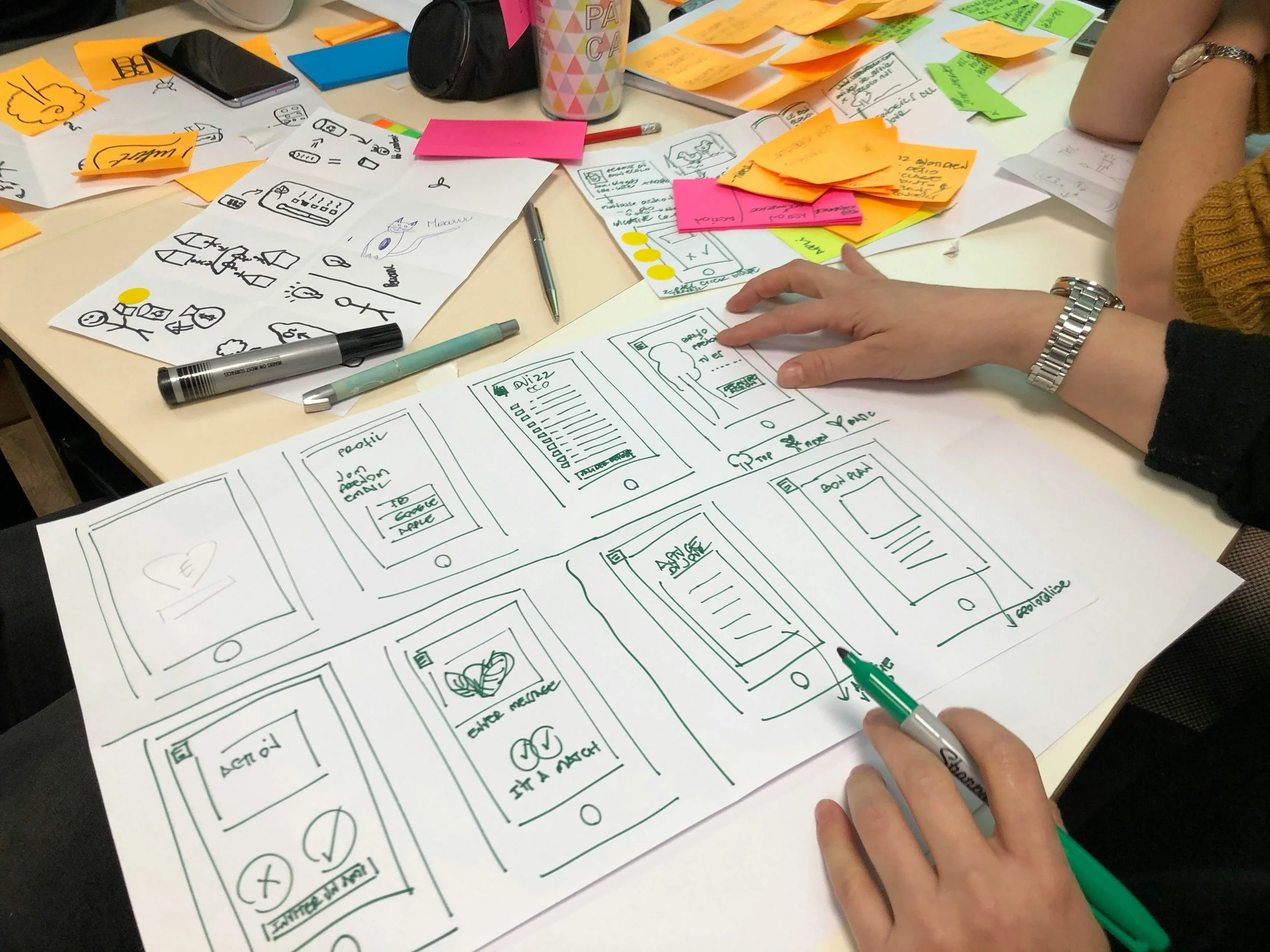
- Sketch user guidance. Which role sees which screen, which action leads where. A clickable prototype answers these questions faster than any document.
- Collect test data and examples. Real sample documents, data sets, and edge cases are more valuable to a development team than any abstract description.
- Prioritize. What has to work in the first version, and what can wait. This is the most important decision for budget and timeline.
With this groundwork, the first meeting with a software development agency is no longer an introduction but a working session. Our article on the app development process describes what the path typically looks like from there.
Where a Prototype Ends and a Product Begins
A prototype built with AI shows what the software should do. What it usually does not contain is everything that makes software viable in real-world use:
- Identities and roles. Who may see and change what, how is that enforced, what happens when someone leaves.
- Data model. A prototype stores whatever is needed right now. A product needs a model that can withstand changes over years.
- Interfaces. Integration with ERP, CRM, identity providers, or specialized systems is usually the most complex part and simply absent from the prototype.
- Error handling. What happens when a service does not respond, a file is corrupt, or two people change the same thing at once.
- Data protection and security. Encryption, logging, deletion concepts, access control, and the question of where the data actually resides.
- Operations. Monitoring, updates, backups, dependencies that need regular updates, and for mobile apps, store approval.
None of these points is visible when clicking through the prototype. Together, they account for most of the effort.
What You Need a Provider For
When commissioning software, code is no longer the expensive part. It is produced quickly these days, at our company too, with AI support. What you pay for is decisions and accountability:
- Architecture decisions that determine whether the software can still be extended in three years or needs to be rebuilt.
- Security as a process, not a feature: reviews, tests, dependency checks, handling of credentials.
- Integration into your existing system landscape, including coordination with your IT department.
- Quality assurance that also covers edge cases and error states.
- Operations and further development beyond the first version.
- Accountability for the overall result, regardless of which parts of the code were created with AI. How far warranty and liability extend in detail is governed by the contract. Ask about it before commissioning.
A provider that uses AI in its development process carries the same responsibility as before and must additionally be able to explain how it reviews AI-generated code before delivering it. Ask about this.
How to Commission Software Effectively Today
This approach has proven itself in our project discussions:
- Bring the prototype, but as a brief. Agree together whether it will be built upon or serve as a specification while the software is properly rebuilt. Either can be right.
- Clarify goals and non-goals. What the software deliberately should not do saves more budget than any negotiation over day rates.
- Disclose the data situation. Which systems need to be connected, which data is personal, and where it is stored today.
- Ask about the provider's use of AI. Which tools are used, where data goes in the process, and how AI-generated code is reviewed and tested.
- Choose the right billing model. A clearly defined scope suits a fixed price. A project that evolves during development is better served by time and material with short acceptance cycles.
- Clarify usage rights and handover. Which rights to the result you receive, whether and in what form source code is handed over, and which documentation, access credentials, and operating documents are included. These points are part of every reputable contract, but often not in the way clients assume.
Whether you outsource development entirely or only in part is a separate decision. We cover how AI shifts the make-or-buy question in our article on outsourcing software development.
What Commissioning Software Costs Today
AI has shifted the costs of software development, not eliminated them. What is standardized becomes cheaper: boilerplate, forms, standard views, tests, documentation. Here, AI delivers a real speed gain.
The parts that drive most of the budget anyway do not become cheaper: coordination with business teams, architecture, integration with existing systems, security, quality assurance, and operations. Anyone commissioning software with many interfaces, regulated data, and multiple platforms pays mainly for these.
We break down the factors that determine a budget in our article on app development costs.
Conclusion
AI has not made commissioning software easier, but it has made it easier to prepare. Use AI tools to clarify requirements, processes, and user guidance, and to build a prototype as a shared basis for discussion. The decisions that determine viability, security, and operations still belong in the hands of a team that takes responsibility for them. From Vienna, we support companies from the first idea through to operations, using AI where it adds quality and speed without handing over the review. Learn more about how to start a project with us and our app development services.
FAQ
What groundwork should I do before commissioning software?
Requirements sorted into must-haves and nice-to-haves, a description of the affected processes including edge cases, sample data, and a clear priority for the first version. A clickable prototype helps but is not essential. With this groundwork, the first meeting becomes a working session.
Fixed price or time and material?
A clearly defined, stable scope suits a fixed price. A project that evolves during development is better served by time and material with short acceptance cycles. In both cases, what matters is that acceptance criteria are defined upfront.
Does AI make commissioning software cheaper?
Partly. Standardized parts are produced faster. The cost drivers remain coordination, architecture, integration, security, and operations. Those who bring a prototype and prepare requirements well save mainly in the concept phase.
How do I recognize an agency that uses AI professionally?
It can explain which tools it uses, where data flows in the process, how AI-generated code is reviewed and tested, and who is accountable for the result. An agency that sells AI use as a reason for discounts without a quality process has not understood the question.