MVP Development 2025 - Fast Track to a Market-Ready App
A brilliant idea is worth little if it arrives too late. Minimum Viable Products (MVPs) deliver early real user feedback, validate business hypotheses, and protect your budget. This guide shows how startups and corporates can go from vision to a published MVP within 90 days - with clear costs, roles, and tech building blocks.
Why an MVP instead of a "big bang" launch?
Minimize market risk
Early user interaction uncovers flawed assumptions. An MVP tests demand before seven-figure budgets are burned.
Focus your budget
Invest only in core value hypotheses. Push notifications to measure engagement? Yes. Complex social share stickers? That can wait until version 2.
Convince stakeholders
Investors and executives trust working products more than presentations. An MVP creates traction - and with it, negotiating power.
Six-step roadmap from idea to MVP
- Define product vision & target KPIs
Use the SMART framework, e.g. "1,000 active users, 40%+ Day-7 retention within 90 days". - Prioritize feature scope
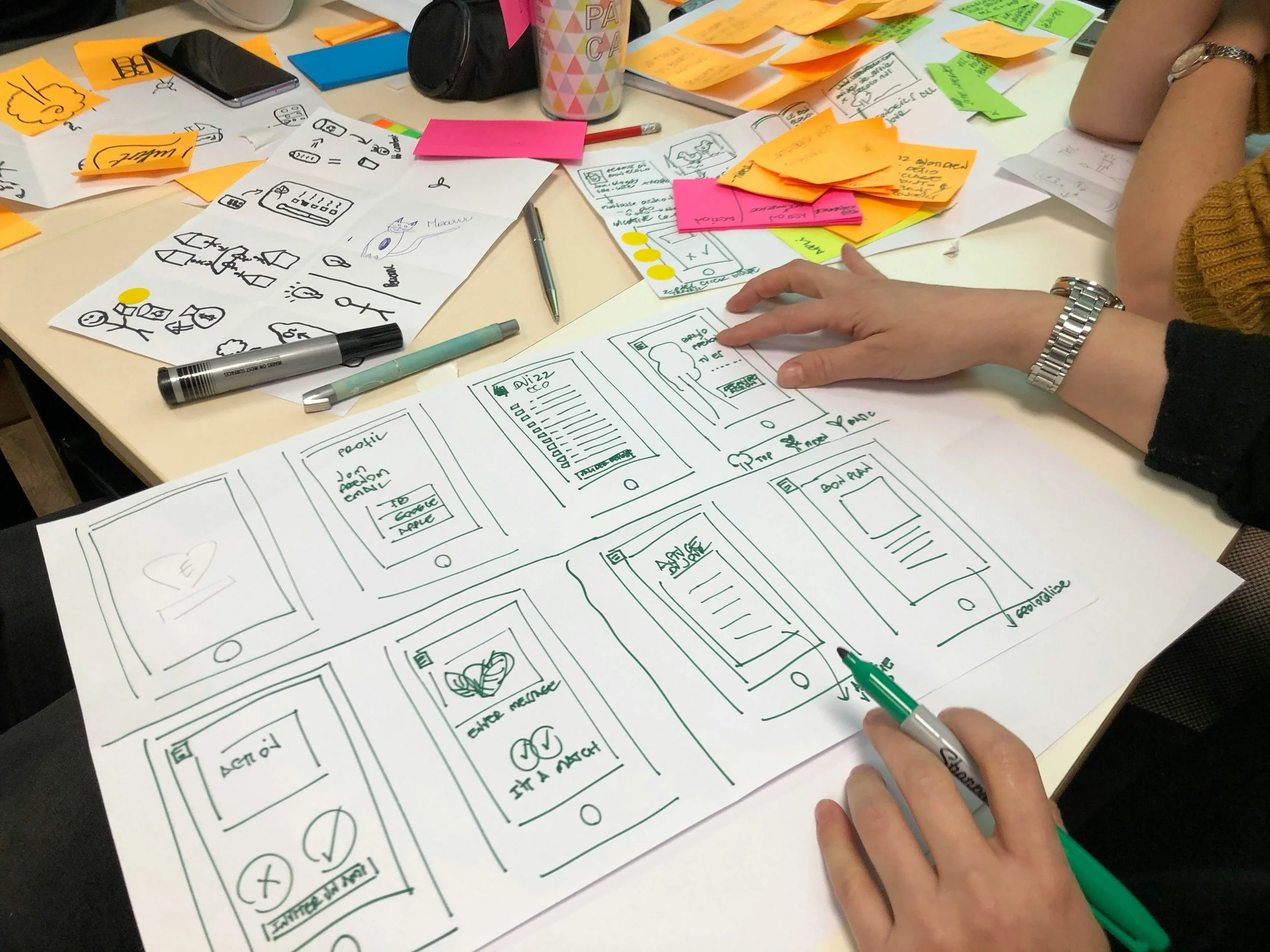
MoSCoW or KANO: Only features that directly contribute to the KPI target. - Rapid prototyping & UX testing
Figma wireframes - click dummies - 5 usability tests. - Choose tech stack
E.g. Flutter for a single codebase (iOS, Android, web), backend as Firebase BaaS (Auth, Firestore, Cloud Functions). - Development in sprints
Three 2-week sprints for core features, one sprint for QA + beta, one sprint for soft launch & analytics; design always one sprint ahead (dual-track Scrum). - Soft launch & data loop
Closed TestFlight / Google Play Internal Testing, collect metrics, reprioritize backlog, next cycle.
MVP cost indication 2025
Depending on scope, team setup, and technology decisions, an MVP can be realized within a lean budget. Compared to dual-native + custom backend, you save 30-40% and gain several weeks of time-to-market.
When does the MVP end?
An MVP ends when
- the hypothesis is disproven - pivot or stop, or
- the core KPIs are achieved - transition to Minimum Lovable Product (MLP).
Define a measurable exit criterion at kick-off - and stick to it.
Recommended tech building blocks 2025
- Flutter - fastest multi-platform development, hot reload
- Firebase Suite - Auth, Firestore, Functions, Crashlytics, Google Analytics
- Stripe Checkout - subscription payments, PSD2-compliant
- App store test programs - TestFlight & Google Play Internal/Closed Testing for beta rollouts and A/B experiments
Roadmap after the MVP - from viable to scalable
- Data-driven iteration - prioritize backlog by retention cohorts
- Quality & testing - pay down MVP-phase tech debt, expand automated tests
- Cloud migration - scale from BaaS to microservices / Kubernetes at 100k+ users
- Security hardening - pen tests, GDPR audit, ISO 27001 roadmap
- Go-to-market 2.0 - app store SEO, marketing automation, performance ads
Conclusion - fast, focused, data-driven
A well-managed MVP delivers within 90 days:
- a functional app with a clear core feature set,
- initial real user and payment data,
- a solid decision basis for scaling or pivoting.
With Flutter and Firebase BaaS, you save up to 40% on development and infrastructure costs and shorten release cycles from months to weeks. In short: MVP development in 2025 is the fastest and most cost-effective path to product-market fit.
Let's talk!
Want to see your MVP live in 90 days? Book a free MVP assessment with allaboutapps. We review your concept, provide a realistic effort and cost estimate, and guide you on the fastest path to a market-ready app.