App Development Process: How Companies Get from Idea to a Reliable Release

A reliable app development process does not start with a rough requirements document but with clear goals, prioritized scope, and a solid technical assessment.
The Short Answer
A professional app development process does not go straight from idea to implementation. It starts with a vision, user groups, and scope, moves through conception, UX/UI, and technical assessment into plannable implementation phases, and does not end at release but in a sustainable setup for operations and evolution.
Why the Process in Enterprise Projects Differs from Quick Product Sketches
In an enterprise context, app projects almost never depend solely on a good idea. There are business units, existing systems, role models, security requirements, budget ownership, and often multiple stakeholders with differing expectations. This is precisely why collecting features and jumping into development is not enough.
A sound process provides orientation here. It makes visible what truly needs to be clarified first, which decisions can become costly later, and where risks can be reduced before implementation even begins. This saves not only in-project discussions but also improves quality, speed, and reliability.
Phase 1: Sharpening Vision, User Groups, and Scope
The starting point is not the technical platform but the question of what business or operational value the app should deliver. Is it about a new digital service, a self-service product, an internal application, or a mobile extension of existing processes? Only when this vision is clear can user groups, usage scenarios, and relevant core features be derived properly.
It is important to distinguish early between must-have, should-have, and nice-to-have. Many projects become unnecessarily heavy because the first release tries to accommodate too many different expectations. A precise scope increases plannability and provides a significantly better foundation for conception and effort estimation.
Phase 2: Conception, UX/UI, and MVP Prioritization
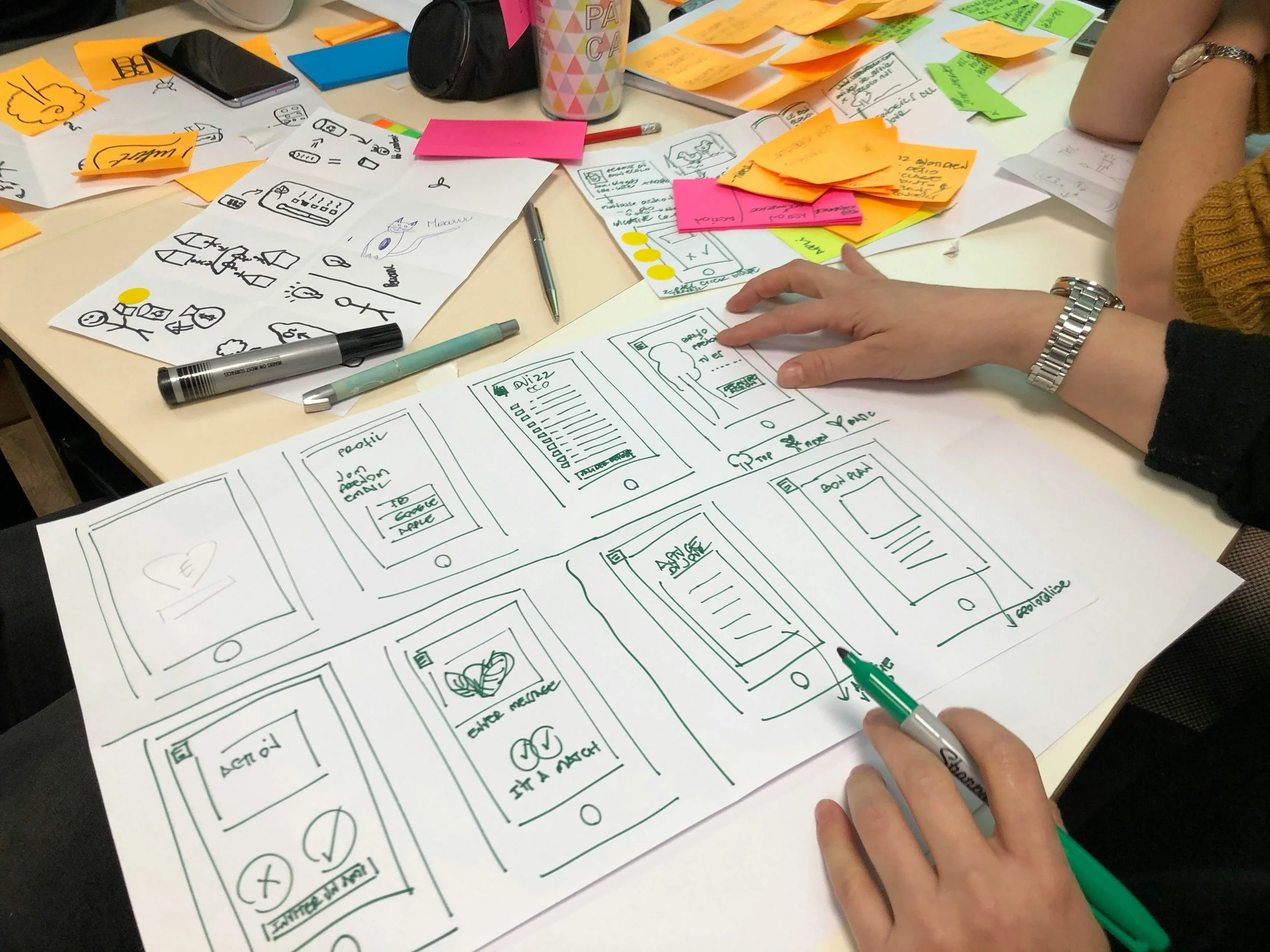
Once vision and scope are sharpened, the next step is translating them into concrete user flows, roles, information architecture, and initial interaction logic. This is where it becomes evident whether a project will be understandable and efficiently usable in daily practice. Good conception reduces misunderstandings, makes priorities visible, and prevents teams from losing themselves in individual features too early.
For many companies, the MVP question is also decisive at this stage. An MVP is not simply a smaller version of the full product but a deliberately scoped initial core. It should deliver real value while realistically accounting for learning goals, risks, and budget.
Phase 3: Clarifying Architecture, Integrations, and Security Requirements
Before implementation begins, technical foundations must be assessed. This includes platform choice, backend and API logic, data models, integrations, permissions, offline requirements, monitoring, and security and compliance topics. In many enterprise projects, these elements influence effort, quality, and future extensibility more than the visible interface.
Those who address this layer too late quickly end up in costly corrections. A professional process therefore creates a shared technical picture early: Which systems are affected? Where do dependencies lie? Which decisions are essential for the first release, and what can deliberately be deferred to later stages?
Phase 4: Organizing Implementation in Plannable Increments
The implementation phase is not about building as much as possible as quickly as possible, but about progressing in sensibly scoped increments. This means: clear responsibilities, traceable prioritization, regular reviews, and a shared understanding of when a result is genuinely reliable from both a business and technical perspective.
Good app development combines precision with pace here. Teams work along a clear vision while still responding to new insights. For companies, this is especially important when business logic, design, and technical implementation are tightly interwoven and decisions should not be artificially separated.
Phase 5: Preparing Testing, Release, and Operations
A release is not a purely technical final phase. It requires quality assurance, test cases, rollout logic, monitoring, permissions, store or deployment preparation, and a clear approach to handling errors and support. Especially in demanding industries, this phase determines whether an app appears professional or whether uncertainty and operational friction arise.
Companies should therefore not address the operational aspect only at the end. Those who think early about release processes, analytics, monitoring, and responsibilities create not only a safer launch but also a significantly better foundation for what comes after.
The first release is just a milestone. What truly matters is how quickly and cleanly the product can evolve afterward. Which signals from usage, support, and operations are captured? How are new requirements prioritized? Which technical or business debts need to be consciously addressed?
Companies benefit long-term when the app development process is not designed for a one-time launch but for a product that can learn and grow in real-world use. This is exactly the difference between a one-off built app and a reliable digital product.
Conclusion
A good app development process does not reduce necessary quality - it creates the conditions for it. Those who structure vision, conception, technical assessment, implementation, and operations properly gain better decisions, more realistic budgets, and a product that is not just released but can also be reliably evolved.
FAQ
How long does it take to reach a first release?
This depends heavily on scope, complexity, and integrations. The timeline becomes more plannable when goals, MVP, and technical constraints are clarified properly early on.
When is an MVP the right approach?
An MVP makes sense when a first reliable product core can be defined that delivers real value while making key assumptions testable.
When should the backend be included in planning?
Not only after design. Roles, data models, integrations, and security often influence effort more than the interface and should be considered early.
What belongs to a good project kickoff in app development?
A good project kickoff clarifies vision, user groups, scope, priorities, technical dependencies, and a realistic path into conception and implementation.
If you want to set up your app project's process on a reliable foundation, a structured project kickoff is usually more valuable than a premature estimate. allaboutapps supports companies with permanent interdisciplinary teams in Vienna - precise, fast in collaboration, and with high quality standards in conception, implementation, and operations.