.webp)
Vibe Coding for Enterprises: How AI Prototypes Become Production-Ready Software
Vibe coding can drastically accelerate prototypes. But production-ready enterprise software requires guardrails, reviews, security, deployment, and clear ownership.
The Short Answer
Vibe coding can be very useful in an enterprise context - especially for exploration, prototypes, and quick initial product artifacts. Production software, however, does not emerge automatically. As soon as sensitive data, integrations, security, deployments, or long-term maintainability become relevant, guardrails, architecture, code reviews, tests, and clear responsibilities are essential. The right approach is therefore not to "vibe-code everything" but to channel AI-assisted development into production-ready software in a controlled manner.
What Companies Should Understand by Vibe Coding
Vibe coding describes a very direct approach to AI-assisted development: ideas are formulated in natural language, and within a short time, initial screens, flows, components, or entire prototypes emerge. The appeal lies in the speed. Business teams can test faster, product teams can visualize faster, and hypotheses can become tangible more quickly.
For companies, however, it is important to note: the term must not be equated with professional software development. A rapid prototype is valuable - especially when it accelerates discussions. Production-ready software, however, requires more than speed. It requires quality, technical controllability, and a clean path into operations.
Where Vibe Coding Delivers Real Value
Used correctly, vibe coding can be very helpful in several situations:
- early product ideas become visible faster
- MVP hypotheses can be discussed more concretely
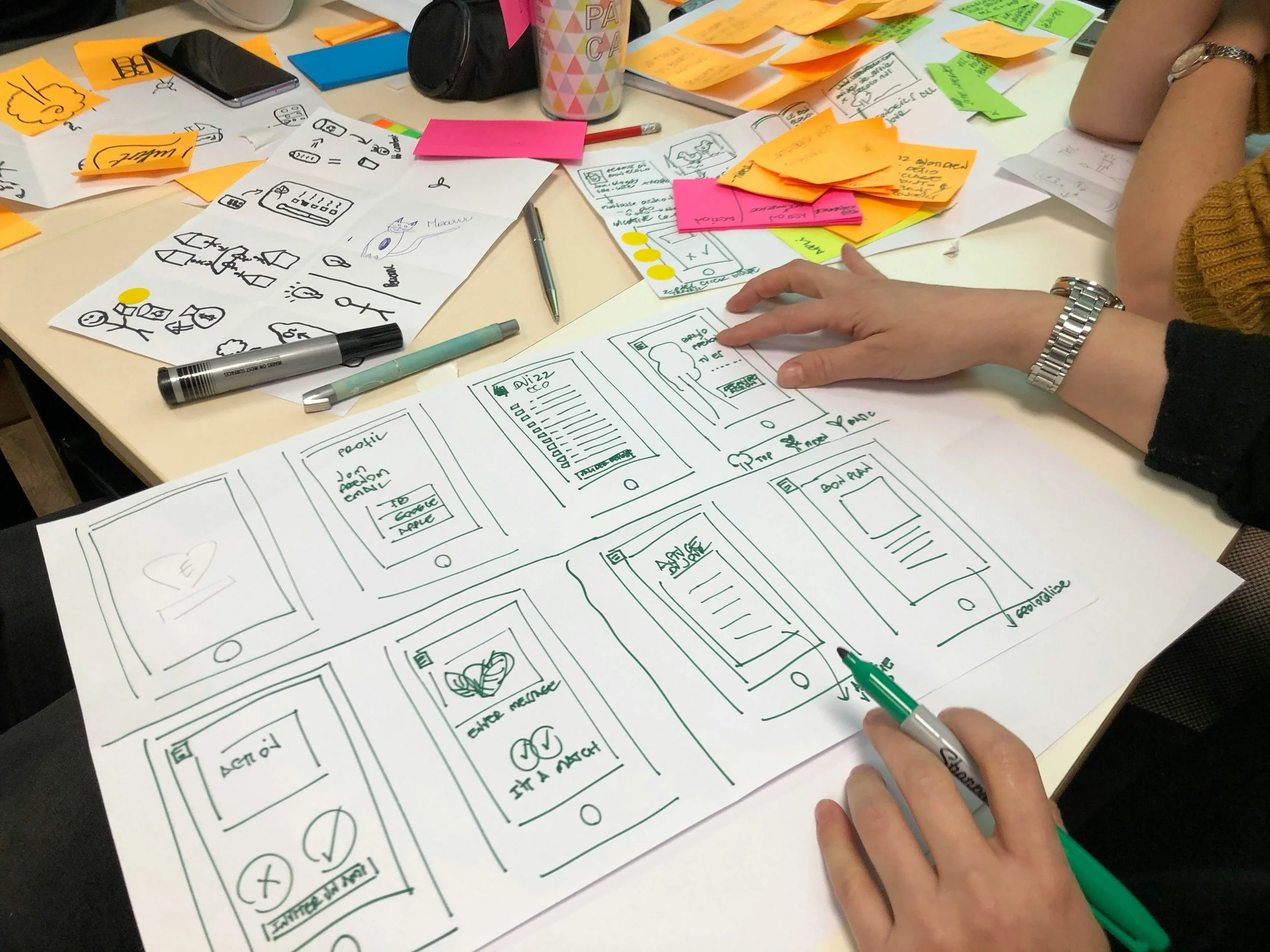
- internal tools or utility applications can be sketched out more quickly
- UX flows, forms, or self-service ideas become rapidly testable
- technical and business assumptions can be challenged early
The greatest value emerges where teams do not blindly trust generated code but use the speed to make better decisions. Vibe coding then becomes not a substitute for quality but an accelerator for learning, prioritization, and tangible communication.
Where the Risks Lie in an Enterprise Context
This very speed becomes problematic when a prototype is unknowingly pushed toward production. Typical risks include:
- unclear architecture and hard-to-maintain code
- missing tests and insufficient review processes
- insecure dependencies or secret handling
- unclear authentication, roles, and data access
- missing documentation and ownership
- deployments without a reliable operational framework
The actual risk is not that AI generates code. The risk is that organizations distinguish too late between a quick prototype and reliable production software.
From AI Prototype to Production-Ready Software
The path from initial AI artifacts to production-ready software ideally follows clear steps:
- Assess the prototype from a business and technical perspective: What is merely demonstration, and what has genuine product potential?
- Define the target vision: Which user groups, processes, data, and quality requirements are relevant?
- Sharpen architecture and responsibilities: Which parts can be retained, and which need to be rebuilt or hardened?
- Add reviews, tests, and security: Without these steps, the prototype remains a risk.
- Build deployment, monitoring, and operations: Only then does production software emerge.
This transition is critical. Many companies will start with AI-assisted prototypes in the future. The actual value, however, only emerges when these become a reliable product with technical and organizational maturity.
What Setup Companies Need for Vibe Coding
Anyone who wants to seriously use vibe coding as a service or internal practice needs a sound setup. This includes:
- approved tools and clear data handling rules
- compliant infrastructure and clean access models
- onboarding and guardrails for business teams and development teams
- review processes for code, architecture, and security
- rules for deployment, versioning, and ownership
- clear handoffs from prototyping to production development
This is exactly where experimentation separates from professional use. Companies do not benefit from producing as many artifacts as possible at speed. They benefit from making good ideas visible quickly and then bringing them to completion with professional engineering.
When Vibe Coding Makes Sense - and When It Does Not
Vibe coding makes sense primarily where speed in thinking and exploring matters: for early product ideas, internal utility applications, conceptual preliminary stages, or as an accelerator in early prototyping.
It is not sufficient where scaling, sensitive data, compliance, complex integrations, or critical business processes are involved. In those cases, the full discipline of professional product development is needed - meaning conception, UX/UI, architecture, security, QA, deployment, and evolution.
How Teams Cleanly Separate Experimentation from Production
A common mistake in companies is mixing prototyping and productionization organizationally. Then the same expectations apply to early experiments as to production-ready software - or vice versa. A better approach is a clear model: in the exploration phase, ideas may emerge quickly, assumptions may remain open, and artifacts may be deliberately provisional. Once an initiative gains product relevance, quality standards, responsibilities, and technical requirements shift.
This separation is not a bureaucratic exercise but a protective mechanism. It allows speed in the early phase and reliability in later implementation. This is exactly how vibe coding becomes productively usable in an enterprise context.
Why Vibe Coding Complements Professional Development Rather Than Replacing It
Companies will increasingly encounter AI-generated prototypes, features, or code building blocks in the future - whether from business units, innovation projects, or product work. The right response is neither rejection nor blind trust. The right response is professional assessment.
This is precisely where a new capability emerges: teams need partners who can absorb speed without compromising quality standards and security requirements. Those who can bridge this gap turn short-term momentum into a sustainable competitive advantage.
Conclusion
Vibe coding in an enterprise context is neither a silver bullet nor inherently a risk. It is a new speed tool. Its value emerges when companies use it in a controlled manner: for rapid prototypes, better decisions, and a clean transition into production-ready software. This bridge between pace, quality, and technical maturity will be decisive for many organizations in the coming years.
FAQ
Can vibe coding be useful in enterprises?
Yes - especially for exploration, prototyping, and early product artifacts. What matters is that it is secured through guardrails, reviews, and clear responsibilities.
Is vibe-coded software automatically production-ready?
No. Production software additionally requires architecture, security, tests, deployment, monitoring, and a reliable operational model.
Can existing AI prototypes be evolved rather than started from scratch?
Yes, this is often the right approach. However, it should first be assessed which parts hold business value and which need to be rebuilt or hardened technically.
What is the most important difference between a quick prototype and production-ready software?
The most important difference is controlled quality: clear ownership, technical maturity, security, tests, operability, and long-term evolvability.
If your company wants to leverage AI-assisted development effectively, speed should not come at the expense of quality, security, and operability. allaboutapps supports with permanent teams in Vienna on setup, guardrails, reviews, and the path from prototypes to production-ready software.